Parking and charging infrastructure
Modular parking and charging infrastructure.
Unstructured parking and manual charging create operational friction. Standab gives shared scooters and e-bikes a defined place to return, park and charge in public space.
Designed for urban infrastructure.
Each module serves a defined function. Together they form a system cities can deploy, expand, and integrate into existing street infrastructure.
Charging happens as part of parking. No cables, no staff intervention, no gaps in availability.
Sections connect and expand as demand changes. Capacity can be planned around local site conditions.
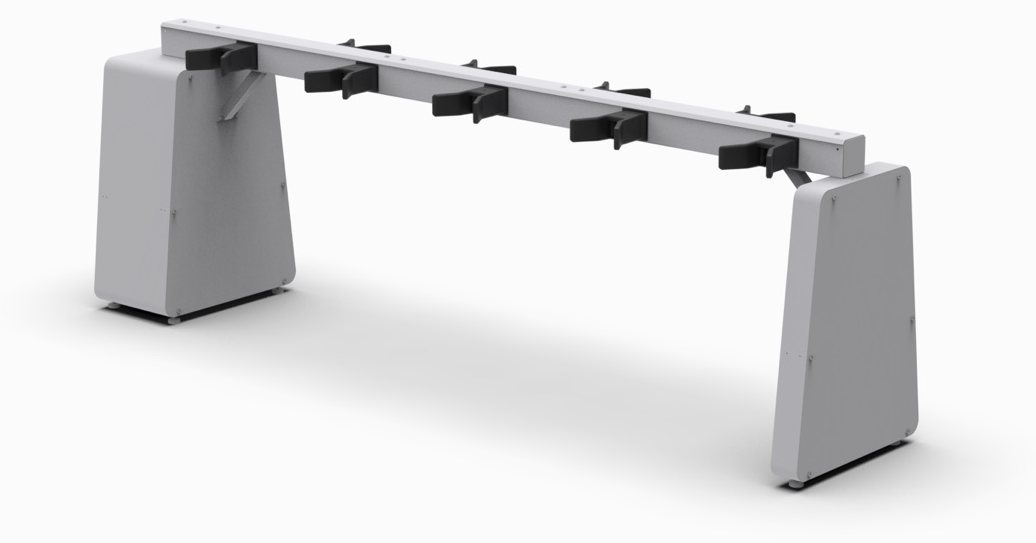
E-scooters and e-bikes in the same rail. One installation handles mixed fleets.
Occupancy, charge state, and fault status in real time.
Designed for surface installation and connection to available power, with deployment details set per site.
Operational data can support planning, follow-up and system improvement. Integration options depend on each deployment and operator setup.
Phased deployment in public environments.
A standard model for cities. Each stage is defined and measurable before the next begins.
Site analysis
Location mapping based on mobility flows and accessibility. City and operator alignment before any hardware is ordered.
Pilot installation
One section in a live urban environment. Real usage data from day one.
Evaluation
Usage patterns, urban impact, and operational performance reviewed with city stakeholders.
Optimisation
Module placement refined using measured data before committing to scale.
Scaling
Rollout across additional locations. The infrastructure becomes part of the city's long-term mobility system.
Station section
All specs refer to a single standard section. Multi-section installations scale linearly. Custom configurations available on request.
Infrastructure built to last in cities.
- Modular system for public space
- Designed for daily street use
- Starts small and expands over time
- Live deployments across the Nordics