Micromobility infrastructure
Micromobility works.
Infrastructure is missing.
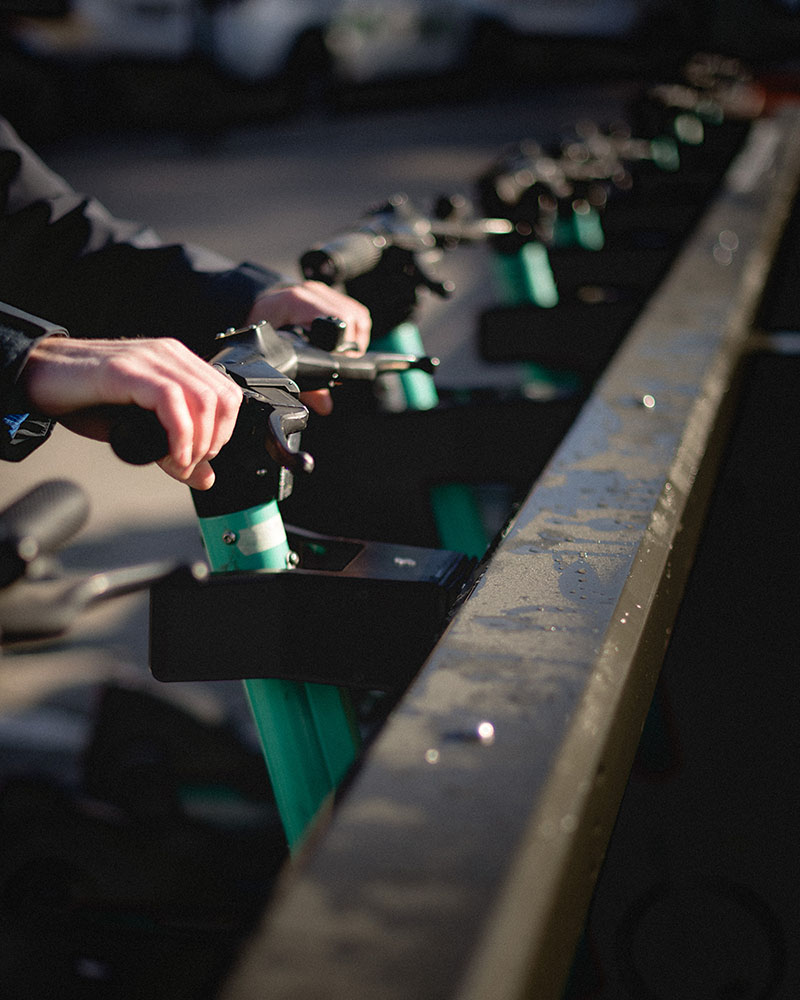
Structured parking and charging for shared scooters and e‑bikes. Built for public space and daily operation.







Micromobility scaled.
Infrastructure didn't.
Shared fleets have grown faster than the physical systems around them. Apps, rules, and geofencing help. They do not solve the physical problem.
The physical layer for shared micromobility.
Standab installs structured parking and charging infrastructure in public space. Cities define where shared mobility belongs. Operators get fleets that charge where they park.
Operating across Europe.
Live and planned deployments across Europe.
"After testing dedicated parking stands for shared e-scooters and e-bikes, Gävle reported better order, easier access to available vehicles, improved traffic safety, and a more pleasant urban environment."
"Shared micromobility needs parking and charging infrastructure that works across operators. Standab provides a practical charging solution built for that model."
"We have been very pleased with how the parking and charging stations have worked in Vaasa. The solution has been straightforward to implement, and the collaboration with Standab has made it easy to get the infrastructure installed and operational. The stations have helped reduce incorrectly parked vehicles by giving users clear, designated places to park, while also enabling vehicles to charge while they are parked. Overall, the solution has worked very well in practice, and we see clear value in integrating charging and parking infrastructure into the city's micromobility system."
"We have seen great value in this collaboration, which has delivered very positive results. It has been particularly interesting to see how the parking stations have helped keep the city more orderly, while the number of trips has increased. We are now taking the lessons learned from this project with us as we shape the future of micromobility in Bærum."
"Micromobility has quickly become a very popular service in Stjørdal and we are thrilled to have the opportunity to participate in this pilot project with Standab, Dott and AtB. Our main goal is to establish a better parking culture with dedicated zones and charging stations, with lower service costs, a higher utilization rate and fewer battery swaps. The project's early results have already exceeded all expectations."
Shared micromobility needs physical infrastructure.
- Dedicated parking zones in public space
- On-street charging designed to reduce manual battery handling
- Infrastructure financed through charging services, not upfront investment